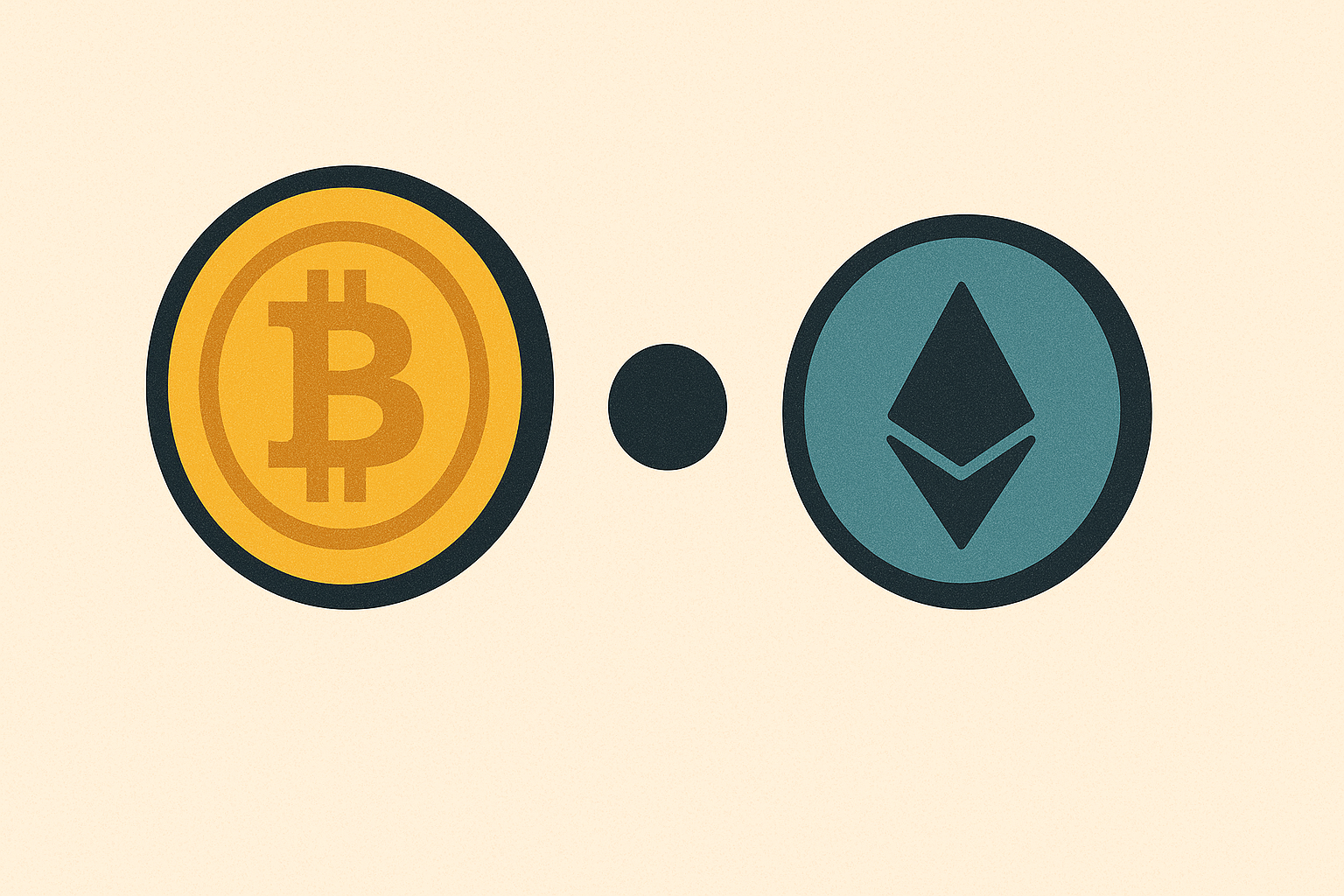
When learning about crypto, you’ll often hear people talk about coins and tokens. But what is the difference? Let’s break it down in simple words.
Contents
What Is a Coin?
A coin is a cryptocurrency that works on its own blockchain.
Examples:
-
Bitcoin (BTC) runs on the Bitcoin blockchain.
-
Ethereum (ETH) runs on the Ethereum blockchain.
-
Litecoin (LTC) runs on the Litecoin blockchain.
Coins are usually used as digital money — to buy, sell, or store value.
What Is a Token?
A token is built on top of another blockchain.
It doesn’t have its own blockchain — it uses an existing one, like Ethereum or Binance Smart Chain.
Examples:
-
USDT (Tether) is a token on Ethereum and other chains.
-
Shiba Inu (SHIB) is an Ethereum-based token.
-
Chainlink (LINK) is also a token.
Tokens are often used for apps, games, DeFi, or governance — not just as money.
Key Differences: Coin vs Token
| Feature | Coin | Token |
|---|---|---|
| Has its own blockchain? | ✅ Yes (e.g., Bitcoin) | ❌ No (uses another chain) |
| Main use | Digital money | Apps, DeFi, NFTs, more |
| Example | BTC, ETH, LTC | USDT, SHIB, LINK |
What About Altcoins?
Altcoins are any cryptocurrencies other than Bitcoin.
-
Some altcoins are coins (like Ethereum, Litecoin).
-
Some altcoins are tokens (like Uniswap, AAVE).
So both coins and tokens can be considered altcoins.
Final Thoughts
So, what is coin vs token?
-
A coin runs on its own blockchain and is used like money.
-
A token runs on another blockchain and can be used for many things.
Both are part of the crypto world — and now you know the difference!